
Monday, December 29, 2008


Monday, December 22, 2008
E-Cloth Microfiber Towels

EnviroProducts E-Cloths and mops are made from microfibers to clean hard surfaces throughout your home with just water. That means no chemical cleaning agents necessary, get it? That’s good news for allergy and asthma sufferers, as well as those with chemical sensitivity. It gets especially high marks for cleaning stainless steel, glass, granite, and wood.

To learn more about this eco-friendly product, please go to the E-Cloth website: http://www.ecloth.com/about-e-cloth/
Cleaning Stainless Steel
Here are some options for cleaning your stainless steel:
Stainless steel is known for its ability to be a clean surface that resists corrosion and rust. Dirt, dust and grime, however, put stainless steel at risk for corrosion and rust. Luckily, stainless steel responds well to cleaning, never wearing out from excessive cleaning, as long as certain rules are followed.
1. Water and a cloth.
Routine cleaning can be accomplished by using warm water and a cloth. This is the least risky option for cleaning stainless steel. Dry with a towel or cloth to prevent water spots. Wipe in the directions of the polish lines.
2. Mild detergent, (dish washing liquid) and cloth.
For cleaning that needs more power, mild detergent and warm water can do a great job without damaging the stainless steel. Make sure you rinse the surface thoroughly to prevent staining and spotting. Towel dry to prevent water spots which can be caused by minerals in water.
3. Glass cleaner for fingerprints.
Fingerprints are one of the biggest complaints about stainless steel, but can be taken care by using glass cleaner or household ammonia. Rinse thoroughly and towel dry. There are some newer types of finishes for stainless steel that resist fingerprints, a must if your pint-sized helpers leave their mark on your stainless steel appliances.
4. Stainless Steel Cleaner.
If you’ve had staining or scratching, or need to polish your stainless steel, a stainless steel cleaner may be a good option. Some of these cleaners and polishes can help minimize scratching and remove stains. They also can polish stainless steel surfaces nicely. Read the directions on the stainless steel cleaner and test in an inconspicuous spot. Be sure to rinse thoroughly and towel dry.
Sarah Aguirre, http://housekeeping.about.com/od/ideasbysurface/qt/steelclean.htm
Stainless steel is known for its ability to be a clean surface that resists corrosion and rust. Dirt, dust and grime, however, put stainless steel at risk for corrosion and rust. Luckily, stainless steel responds well to cleaning, never wearing out from excessive cleaning, as long as certain rules are followed.
1. Water and a cloth.
Routine cleaning can be accomplished by using warm water and a cloth. This is the least risky option for cleaning stainless steel. Dry with a towel or cloth to prevent water spots. Wipe in the directions of the polish lines.
2. Mild detergent, (dish washing liquid) and cloth.
For cleaning that needs more power, mild detergent and warm water can do a great job without damaging the stainless steel. Make sure you rinse the surface thoroughly to prevent staining and spotting. Towel dry to prevent water spots which can be caused by minerals in water.
3. Glass cleaner for fingerprints.
Fingerprints are one of the biggest complaints about stainless steel, but can be taken care by using glass cleaner or household ammonia. Rinse thoroughly and towel dry. There are some newer types of finishes for stainless steel that resist fingerprints, a must if your pint-sized helpers leave their mark on your stainless steel appliances.
4. Stainless Steel Cleaner.
If you’ve had staining or scratching, or need to polish your stainless steel, a stainless steel cleaner may be a good option. Some of these cleaners and polishes can help minimize scratching and remove stains. They also can polish stainless steel surfaces nicely. Read the directions on the stainless steel cleaner and test in an inconspicuous spot. Be sure to rinse thoroughly and towel dry.
Sarah Aguirre, http://housekeeping.about.com/od/ideasbysurface/qt/steelclean.htm
Wednesday, December 17, 2008


Monday, December 15, 2008
Stylish Stainless Steel Kitchens (article)
December 12, 2008
SCRIPPS HOWARD NEWS SERVICE
SCRIPPS HOWARD NEWS SERVICE
A continuing compendium of tips and tricks from Home & Garden Television (http://www.hgtv.com/):
Want the kinds of ovens, ranges, microwaves and vent hoods that the pros use? Get ready to love stainless steel. Top designers offer ideas for incorporating stainless steel without veering into sterile territory:
Want the kinds of ovens, ranges, microwaves and vent hoods that the pros use? Get ready to love stainless steel. Top designers offer ideas for incorporating stainless steel without veering into sterile territory:
••Designers agree that stainless steel is gorgeous as a focal point or a fine enhancement as an accent, but should never be used in both capacities.
''A little goes a long way when you're designing with stainless steel,'' said Michael Schwartz of 2S Designs in north suburban Grayslake. ''You wouldn't want stainless counters or small appliances in the same design with large pro-line stainless pieces, unless you were going for an over-the-top industrial design.''
''A little goes a long way when you're designing with stainless steel,'' said Michael Schwartz of 2S Designs in north suburban Grayslake. ''You wouldn't want stainless counters or small appliances in the same design with large pro-line stainless pieces, unless you were going for an over-the-top industrial design.''
••You can soften the cold shine of stainless with granite and ceramic, says Karen Sciascia, designer for A Matter of Style in Cheshire, Conn. In a traditional or contemporary kitchen design, Sciascia favors cream-colored granite counters to offset the cold shine of stainless appliances. ''The mica in the stone really picks up the soft gray color in the stainless,'' she says.
••Wood is always a welcome foil to stainless, particularly over pro-quality cooktops. ''A stainless range like a Viking is a very commercial, very professional-looking appliance,'' said Sciascia. ''Pairing it with a wood hood is a beautiful look and really warms the appearance of the stainless steel.''
••Sciascia avoids stainless-steel refrigerator doors because they're so big. She steers clients to wood-front panels for large fridges, like SubZero all-fridges or all-freezers.
••Given the demands placed on the ventilator for a high-caliber stainless range, you may also need to provide a louvered vent to an adjacent space for ''makeup air'' to replace the hot air circulated out.
"When you're dealing with pro equipment like that, you should consult an HVAC specialist to see if you need to do anything special with the air,'' said Mark White, a certified kitchen designer for Kitchen Encounters in Annapolis, Md.


Thursday, December 11, 2008
Benefits of Stainless Steel
Aesthetic Appearance
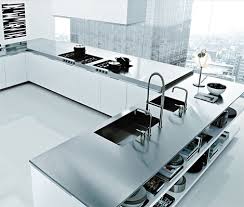
The bright, easily maintained surface of stainless steel provides a modern and attractive appearance.
Corrosion Resistance
Lower alloyed grades resist corrosion in atmospheric and pure water environments, while high-alloyed grades can resist corrosion in most acids, alkaline solutions, and chlorine bearing environments, properties which are utilized in process plants.
Ease of Fabrication
Modern steel-making techniques mean that stainless can be cut, welded, formed, machined, and fabricated as readily as traditional steels.
Fire and Heat Resistance
Special high chromium and nickel-alloyed grades resist scaling and retain strength at high temperatures.
Hygiene
The easy cleaning ability of stainless makes it the first choice for strict hygiene conditions, such as hospitals, kitchens, abattoirs and other food processing plants.
Impact Resistance
The austenitic microstructure of the 300 series provides high toughness, from elevated temperatures to far below freezing, making these steels particularly suited to cryogenic applications.
Long-term Value
When the total life cycle costs are considered, stainless is often the least expensive material option.
Strength to Weight Advantage
The work-hardening property of austenitic grades, that results in a significant strengthening of the material from cold-working alone, and the high strength duplex grades, allow reduced material thickness over conventional grades, therefore cost savings.
http://www.wilkinsonsteel.com/Stainless/benefits.htm
The bright, easily maintained surface of stainless steel provides a modern and attractive appearance.
Corrosion Resistance
Lower alloyed grades resist corrosion in atmospheric and pure water environments, while high-alloyed grades can resist corrosion in most acids, alkaline solutions, and chlorine bearing environments, properties which are utilized in process plants.
Ease of Fabrication
Modern steel-making techniques mean that stainless can be cut, welded, formed, machined, and fabricated as readily as traditional steels.
Fire and Heat Resistance
Special high chromium and nickel-alloyed grades resist scaling and retain strength at high temperatures.
Hygiene
The easy cleaning ability of stainless makes it the first choice for strict hygiene conditions, such as hospitals, kitchens, abattoirs and other food processing plants.
Impact Resistance
The austenitic microstructure of the 300 series provides high toughness, from elevated temperatures to far below freezing, making these steels particularly suited to cryogenic applications.
Long-term Value
When the total life cycle costs are considered, stainless is often the least expensive material option.
Strength to Weight Advantage
The work-hardening property of austenitic grades, that results in a significant strengthening of the material from cold-working alone, and the high strength duplex grades, allow reduced material thickness over conventional grades, therefore cost savings.
http://www.wilkinsonsteel.com/Stainless/benefits.htm
Breif History: Sheffield, England
 Harry Brearly of the Brown-Firth research laboratory in Sheffield, England is commonly credited as the inventor of stainless steel. In 1913, while seeking an erosion-resistant alloy for gun barrels, he discovered and subsequently
  industrialized a martensitic stainless steel alloy. The discovery was announced two years later in a January 1915 newspaper article in The New York Times. This was later marketed under the "Staybrite" brand by Firth Vickers in England and was used for the new entrance canopy for the Savoy Hotel in 1929 in London.
SEE: "A Non-Rusting Steel" article, New York Times 31 January 1915.
About Stainless Steel

In metallurgy, stainless steel is defined as a steel alloy with a minimum of 10% chromium content by mass. Stainless steel does not stain, corrode, or rust as easily as ordinary steel (it stains less), but it is not stain-proof. It is also called corrosion-resistant steel or CRES when the alloy type and grade are not detailed, particularly in the aviation industry. There are different grades and surface finishes of stainless steel to suit the environment to which the material will be subjected in its lifetime. Common uses of stainless steel are cutlery, watch straps, and appliances.
Stainless steel differs from carbon steel by amount of chromium present. Carbon steel rusts when exposed to air and moisture. This iron oxide film is active and accelerates corrosion by forming more iron oxide. Stainless steels have sufficient amount of chromium present so that a passive film of chromium oxide forms which prevents further corrosion.
Stainless steel’s resistance to corrosion and staining, low maintenance, relative inexpensive and familiar luster make it an ideal base material for a host of commercial applications. There are over 150 grades of stainless steel, of which fifteen are 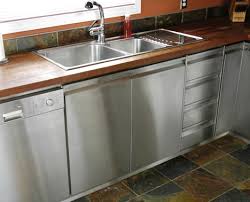 most common. The alloy is milled into coils, sheets, plates, bars, wire, and tubing to be used in cookware, cutlery, hardware, surgical instruments, major appliances, inudstrial equipment, and as an automotive and aerospace structural alloy and construction material in large buildings. Orange juice and other food transport and storage tankers are often made of stainless steel, due to its corrosion resistance and antibacterial properties. This also influences its use in commercial catering kitchens and food processing plants, as it can be steam cleaned, sterilized, and does not need painting or application of other surface finishes.
"Steel Glossary". American Iron and Steel Institute (AISI).
most common. The alloy is milled into coils, sheets, plates, bars, wire, and tubing to be used in cookware, cutlery, hardware, surgical instruments, major appliances, inudstrial equipment, and as an automotive and aerospace structural alloy and construction material in large buildings. Orange juice and other food transport and storage tankers are often made of stainless steel, due to its corrosion resistance and antibacterial properties. This also influences its use in commercial catering kitchens and food processing plants, as it can be steam cleaned, sterilized, and does not need painting or application of other surface finishes."Steel Glossary". American Iron and Steel Institute (AISI).
Subscribe to:
Posts (Atom)